How to brief an exhibition stall and compare quotations.
A useful quotation starts with a shared scope. Before comparing designs and prices, give each agency the same space details, show requirements and priorities. This guide helps marketing and procurement teams build that brief.
By Staunch Eventz · 15 October 2026
1. Start with the space and the organiser’s manual
Share the exhibition name, city, venue, show dates, hall and stand number. Include the allocated floor plan, dimensions, open sides and whether the booking is a shell scheme or bare space. Attach the latest organiser manual so the design team can work with the actual restrictions.
Confirm height limits, permitted structures and any design approval deadline.
Identify columns, access routes and restrictions around the allocated space.
Share setup, delivery, inspection and dismantling windows.
Ask which services must be booked through the organiser and who will pay for them.
If the space has not been allocated yet, label the proposal as provisional. A concept based on assumptions may need changes when the final plan arrives.
2. Define what visitors need to do
Describe the stand’s main purpose: product demonstrations, distributor conversations, lead enquiries or scheduled meetings. List the products and their dimensions, weight and handling needs. Note whether visitors need seating, a demonstration counter, storage, a private discussion area or a screen.
Plan movement through the space before filling it with display elements. Identify the visitor entry points, the team’s working area and where demonstration queues could form. Share any accessibility requirements with both the agency and organiser.
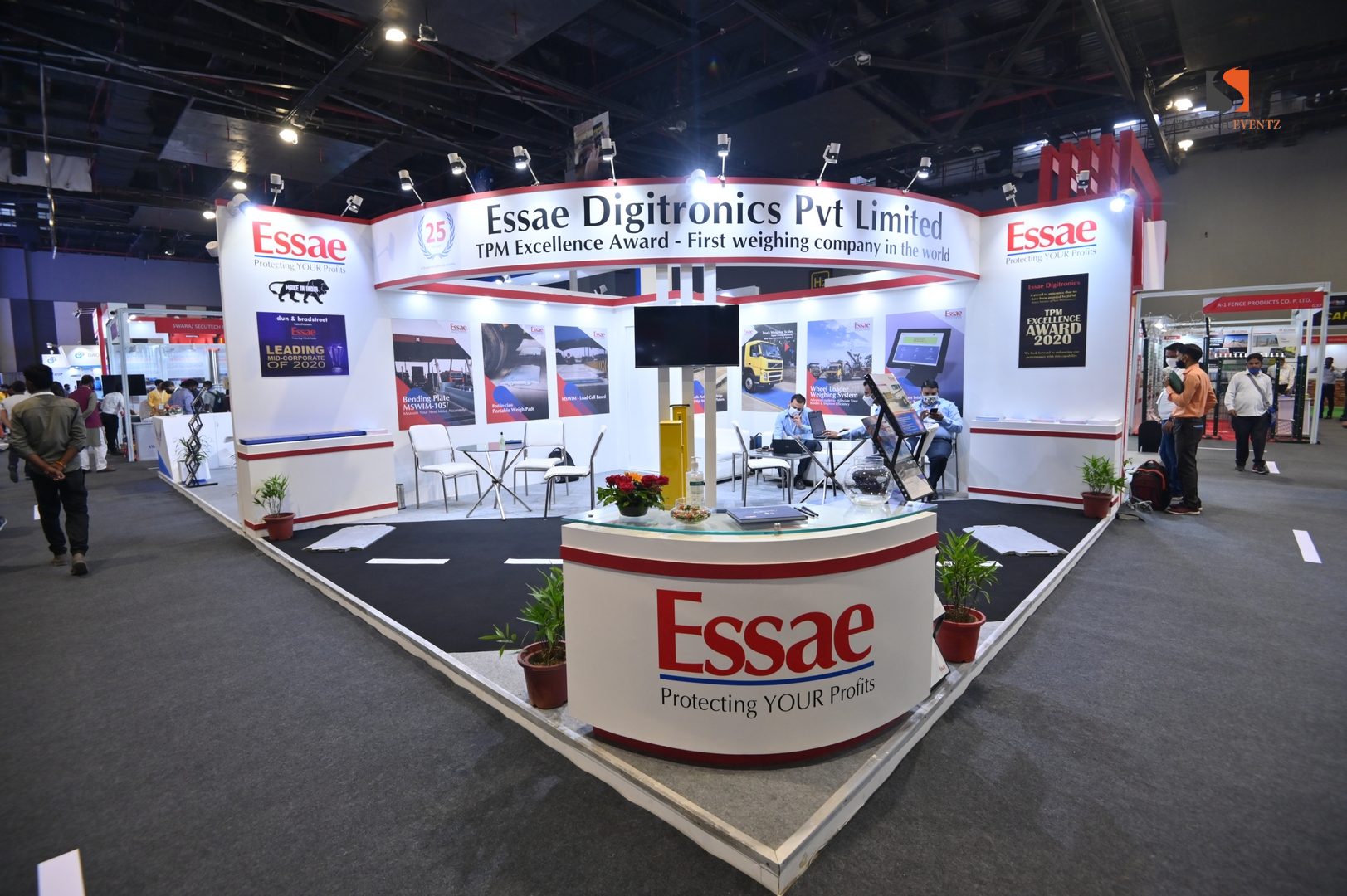
Essae Digitronics stand, from our Traffic Infratech project gallery. Each new stand needs its own space and production brief.
3. Make the design and production scope explicit
Supply brand guidelines, current logos, approved product images and the copy that must appear on the stand. Specify who approves the concept and final artwork, how many design revisions are included, and when production can begin.
Ask the proposal to identify the structure, materials, finishes, flooring, graphics, furniture, lighting and display equipment. Clarify what is custom made, hired or reusable. Renderings help communicate the idea, but the written specification should describe what will actually be supplied.
For demonstrations and screens
List the equipment and its power or connectivity requirements.
Confirm who supplies screens, playback devices, cables and content.
Agree when demonstrations and playback will be tested on site.
Identify the responsible contact for organiser approvals and qualified technical installation.
4. Compare the complete cost, line by line
Give suppliers the same brief and budget range. A lower total can exclude services another quotation includes. Ask each proposal to separate included work, optional items, provisional amounts and exclusions, with quantities where useful.
Design and production: concept, revisions, artwork, structure, finishes and graphics.
Venue services: electricity, internet, rigging or other organiser-controlled charges where applicable.
Logistics and labour: transport, loading, installation, supervision and dismantling.
Show support: staffing hours, maintenance response and replacement arrangements.
Commercial terms: taxes, payment milestones, change costs, overtime, cancellation and any refundable deposits.
Check the validity of the quotation and the approval deadline. Ask for revised written costs when the scope changes rather than relying on an informal promise.
5. Agree ownership, deadlines and handover
Name one person to consolidate design feedback and one person to approve commercial changes. Build a schedule that includes organiser submissions, artwork approval, production, delivery, installation, testing and handover. Confirm what happens if a client input or venue approval is delayed.
At handover, walk through the stand against the approved scope. Check graphics, lighting, furniture, storage and working demonstrations. Record outstanding items and the person responsible for resolving them before visitors arrive.
Before the show ends, confirm dismantling access and what will happen to products, hired equipment and reusable materials. Record any damage or missing items with the relevant supplier.
Copy this into your quotation request
Show and location: name, city, venue, dates and stand number. Space: dimensions, open sides, shell scheme or bare space, floor plan and organiser manual. Purpose: visitor activities, products, demonstrations, meeting and storage needs. Production: branding, graphics, furniture, AV, power and connectivity requirements. Delivery: approvals, setup and dismantling windows, support expectations. Commercial: budget range, decision deadline, billing requirements and approval contact.
Mark undecided items clearly so assumptions can be listed in the proposal.
 STAUNCH